Robbing the Ocean Blind
Part III of "Pillaging the Earth."

When one takes so much that others suffer intolerable consequences, consumption becomes thievery.
They covet fields and seize them, and houses, and take them. They defraud them of their homes, they rob them of their inheritance (Micah 2:2)
FLOWERY WORDS like “responsible harvest,” “ocean stewardship,” and “sustainable seafood” tend to obscure our incredible maltreatment of Ocean. But they cannot hide the hideous truth—that we’re robbing blind the Cradle of Life.
What civilization is doing to Ocean is completely insane. Covering over 70% of Earth’s surface, its abuse of her is a huge part of an overall assault on Mother Earth. Ocean gave birth to life perhaps 4 billion years ago.
If aliens from space were doing what we’re doing to Ocean, we as self-proclaimed “stewards” of the planet would declare all-out-war on them.
There are an astounding number of ways in which humans impact ocean life, often with interactive and complex consequences. Books, videos, and movies are available on the subject. Most offer solutions that echo standard establishment blah-blah about the need for better “management” and “sustainability” policies. This is fantasy. Nothing can adequately mitigate the harms to marine life caused by a global industrial machine built to serve billions of rabid consumers.
What follows is the third part in my review of the greatest larcenies of all time. I wrote this series in part to improve my understanding of the massive scale of civilization’s killing and disruption of life across Earth’s continents and waters. I’ll wrap up this series with comments on Scale Down ethics and strategy (see below).
❖
The Take
Human consumption of fish and other marine life has quadrupled over the past 50 years. This corresponds to a doubling of both human numbers and per capita consumption of seafood. The global market for seafood is growing at a compound annual rate of nearly 3%, and is projected to reach US$134 billion this year.
Since the mid-1990s, the wild catch of fish has leveled off while fish farming has surged. There are limits as to how many fish can be pulled from the ocean, especially as marine ecosystems degrade from a range of human activities.
Oceans are well below their natural capacity to support life. Businesses now turn to “aquaculture” to meet a growing demand for seafood, doing further harm to marine life in the process.
Fish by the numbers
By one estimate, 1.1–2.2 trillion wild finfishes are caught annually, excluding unrecorded capture from illegal fishing, discarded fish, and death caused by abandoned, lost, or discarded fishing gear (called ghost fishing). On top of the number of wild finfish taken each year, another 120 billion fish are farmed and killed.
People consume nearly 90% of sea life caught or farmed. The rest is used mainly to produce fish meal and oil, with about 70-75% of that ironically going to produce more farmed fish. “Bycatch,” the unwanted fish and other marine creatures caught, is believed to comprise 10% of the total pulled from the ocean.
All major regions of ocean are considered “overfished,” an anthropocentric term applied to areas where stocks of fish for human use have been depleted. Here’s a tally of percent overfished: 67% of the Southeast Pacific; 63% of the Mediterranean and Black Sea; 45% of the Northwest Pacific; 39% of the North Atlantic; 38-40% of the Central Atlantic; 35-40% of the South Atlantic; 35-38% of the Indian Ocean; and 14-27% of the rest.
Other Creatures
In addition to fish, astronomical numbers of other lives are intentionally or unintentionally (as bycatch) taken from the ocean each year. These include 100 million sharks, hundreds of thousands of rays, sea turtles, and sea snakes, and mind-boggling numbers of invertebrates—shrimps, lobsters, crabs, clams, oysters, scallops, squids, octopuses, sea urchins, sea cucumbers, sponges, and corals.
That’s not all. According to WWF, over 1,000 whales are commercially killed annually while over 300,000 whales and dolphins fall victim to fisheries bycatch. Bycatch is also estimated to cause the death of about 720,000 seabirds and 345,000 seals and sealions each year.
Food Web Chaos
Obviously, taking vast numbers of fish from the ocean impacts much more than the fish populations themselves. It destabilizes ocean ecosystems, triggering ripple effects and trophic cascades, causing dramatic changes to entire marine communities, with harsh and often enduring consequences for many species. Much has been written about this. A good place to begin a more thorough review is with this 1998 study Fishing Down Marine Food Webs.
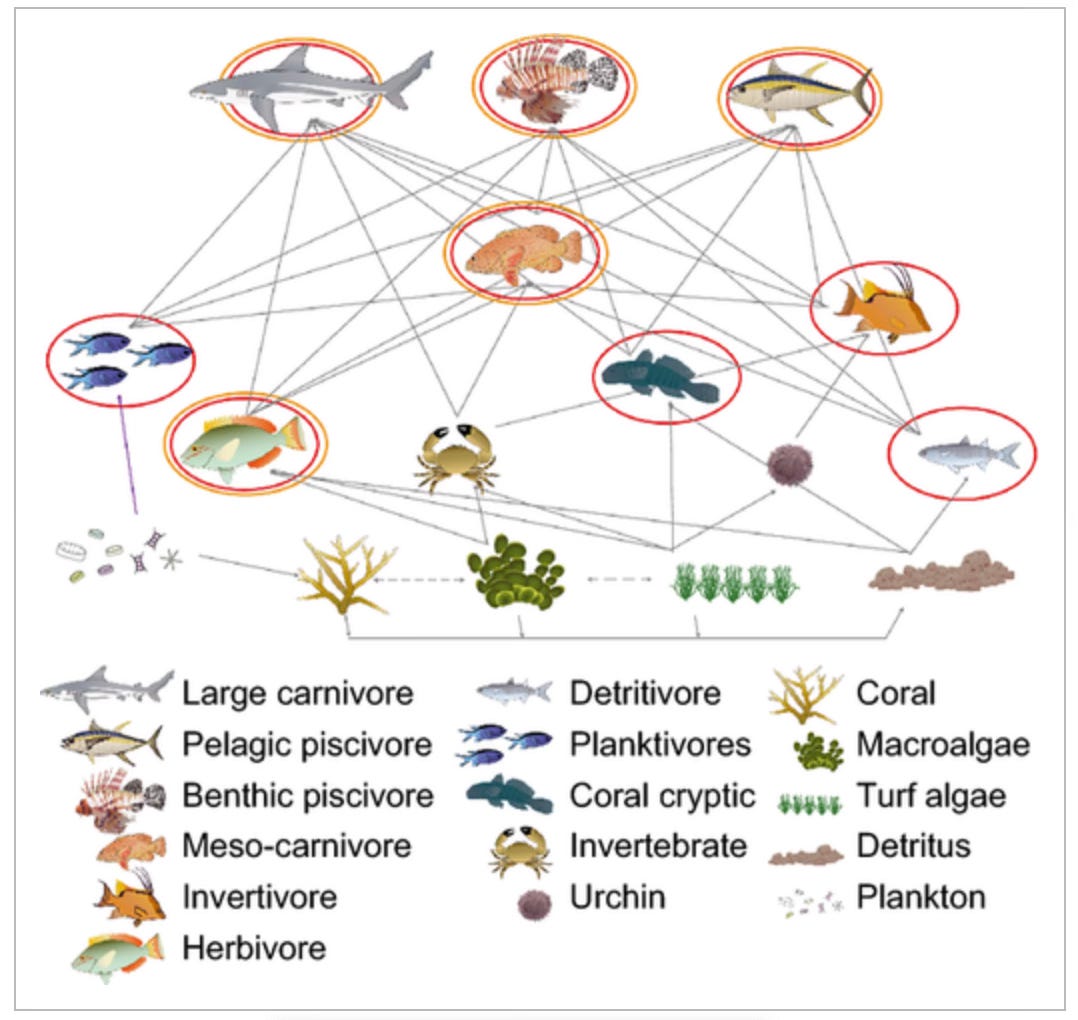
Fish control populations of crustaceans, plankton, other fish, and other organisms, and provide food for sea life including marine birds and mammals. The remains and waste from all sea life is used by microorganisms and recycled as nutrients. The entire oceanic food web is integrated with Earth’s biosphere, including its vital carbon cycle.
This is basic ecology. We more or less know this, and hopefully we’ll never cease to marvel at it.
From personal experience in Hawaii, I can relate how overfishing affects coral reefs, which indisputably are among the most amazing living communities on Earth. Removal of large numbers of algae-feeding fish, such as parrotfish, allow algae to proliferate and smother coral organisms. This, combined with land-based pollution from coastal development, agricultural lands, human waste, etc., and the effects of climate change (ocean acidification and warming) conspires to degrade and ultimately destroy coral reefs.
Marine Fish Farming
Huge numbers of finfish (mainly salmon, about 8.6 million tonnes/year) and shellfish (mostly shrimp, 7.6 million tonnes/year) are produced in marine enclosures. Much of the seafood you see in your local grocery store is farmed.
The environmental impacts of this growing mariculture industry include 1) water pollution from waste products, pesticides, and antibiotics (to control fish parasites and disease); 2) algal blooms and oxygen depletion caused by nutrient overloading; 3) blockage of wild fish movements and migration; 4) killing of sea lions and other sea life attracted to the farms; 5) entanglement of marine creatures in nets and barriers; and 6) escaped farmed fish that prey upon, transmit disease to, or compete or interbreed with wild fish.
I should point out that mariculture is not necessarily bad for marine environments. Raising filter-feeders like oyster and mussels can improve water quality, while growing seaweed can remove human-generated carbon dioxide to help limit ocean acidity. Farm-grown kelp can have the same effect, whereas removal of wild kelp degrades or destroys habitat. For details, view this report from Wildfish.org.
Vessel Strikes
At least 75 large marine animal species are known to be hit by ships. These include whales, dolphins, porpoises, dugongs, manatees, whale sharks, sharks, seals, sea otters, sea turtles, penguins, and fish. For most, hard data on injury and death from boat strikes are unavailable.
The International Marine Mammal Project reports that each year, an estimated 20,000 whales are killed worldwide by vessel strikes. Large whale species such as fin, humpback, gray, and blue whales are most often victims, with collisions concentrated in busy shipping lanes near major ports and along migratory routes.
Some animals, like North Atlantic right whales, face extinction in part because of vessel strikes. (Overall, an estimated 20-25% of marine species are currently threatened with annihilation from various causes.)
Many hundreds of sea turtles are struck every year by boats and jet skis in U.S. waters alone.
The effects of being hit by boats are gruesome, and include severe gashes, severed tails or fins, and blunt force injuries such as skin abrasions, contusions, lacerations, and bone or skull fractures.
Marine animals that are hit may die immediately or continue to live for hours, days, or weeks after the incident. A review of Vessel Collisions With Marine Animals (2020) reports that injured animals experience a reduced welfare because of pain, stress, and possible associated negative psychological states, with the extent of welfare reduction being directly related to the type, severity, and duration of an injury.
It seems that hardly anyone cares enough about ship strikes to demand scaling down maritime vessel traffic: In fact, the volume of shipping continues to grow. It currently includes more than 51,000 commercial ships, 43,000 passenger vessels, and 10,000 military ships worldwide.
Assaulting the Ocean Biome
No ocean denizen can survive without habitat, a suitable place in which to live. Humans trash the ocean in a mind-boggling number of ways. A comprehensive marine science course on our impacts would be needed to fully sort these out, and provide an understanding of how they interact to create an intractable ecological mess.
Don’t let anybody fool you. The multifaceted assault on Ocean by our industrial civilization of 8.2 billion people all but ensures perpetual injustice for marine life.
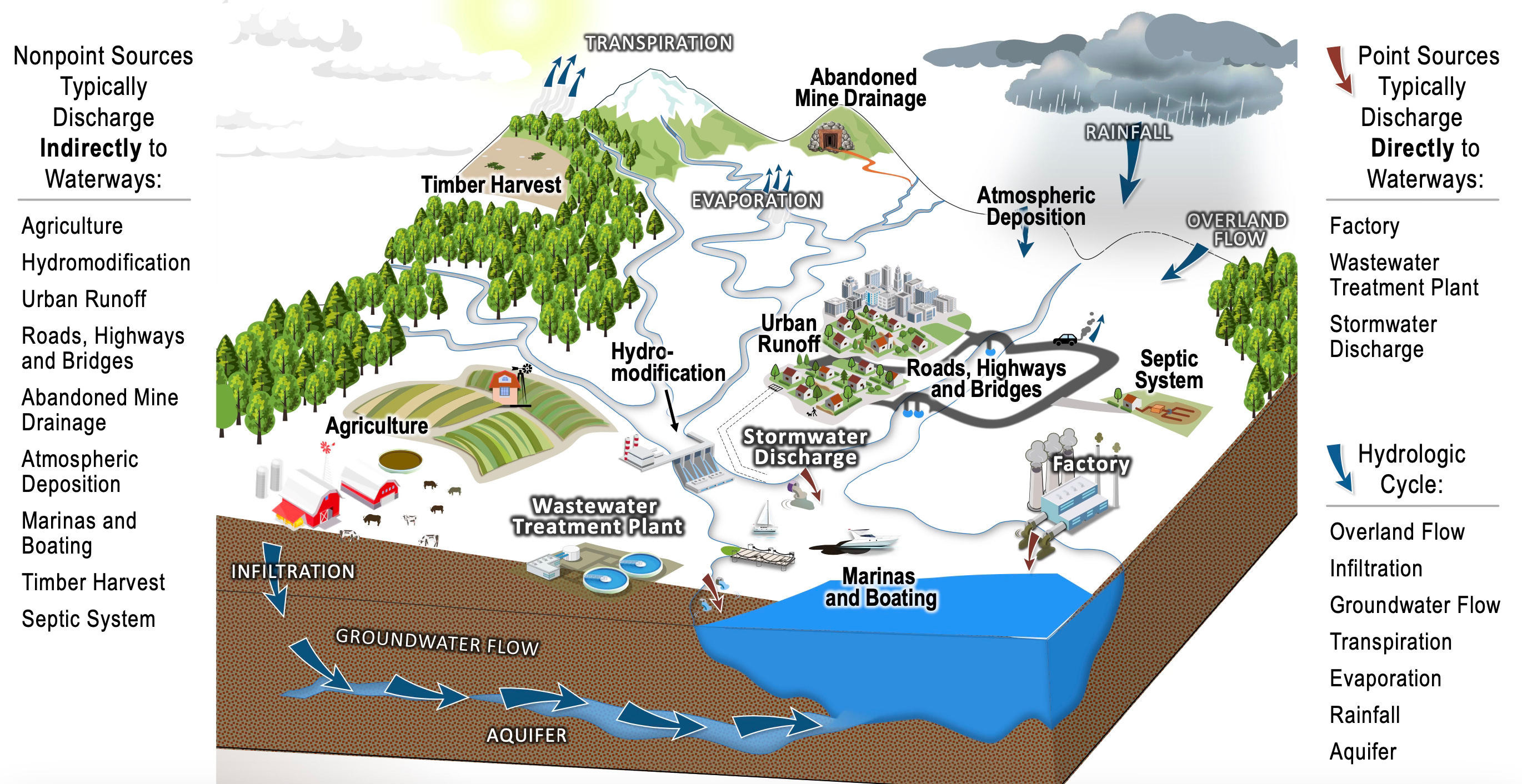
Here’s a brief rundown of human activities that damage and degrade the ocean biome:
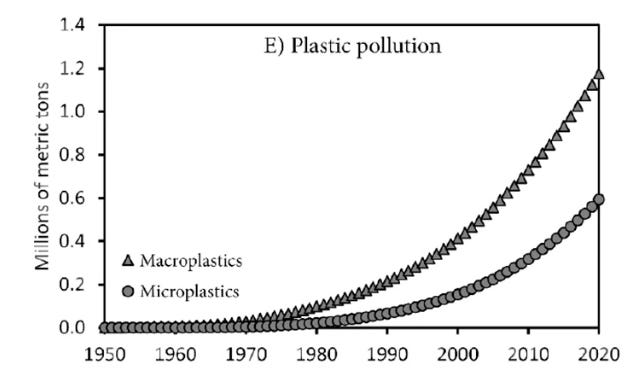
Plastic pollution from packaging, synthetic textiles, buildings, construction, industrial and shipping spills, waste water effluent, tire wear, fishing gear, etc.
Chemical pollution from industries, pesticides, household products, pharmaceuticals, etc.
Oil and natural gas pollution from extraction, spills, offshore drilling, shipping operations, etc.
Sewage, wastewater, and “runoff” pollution from houses, transportation, industry, agriculture, livestock production, etc.
Noise pollution from ocean vessels, military sonar, seismic surveys, offshore development, and deep sea mining.
Artificial light pollution from coastal development and other human activities.
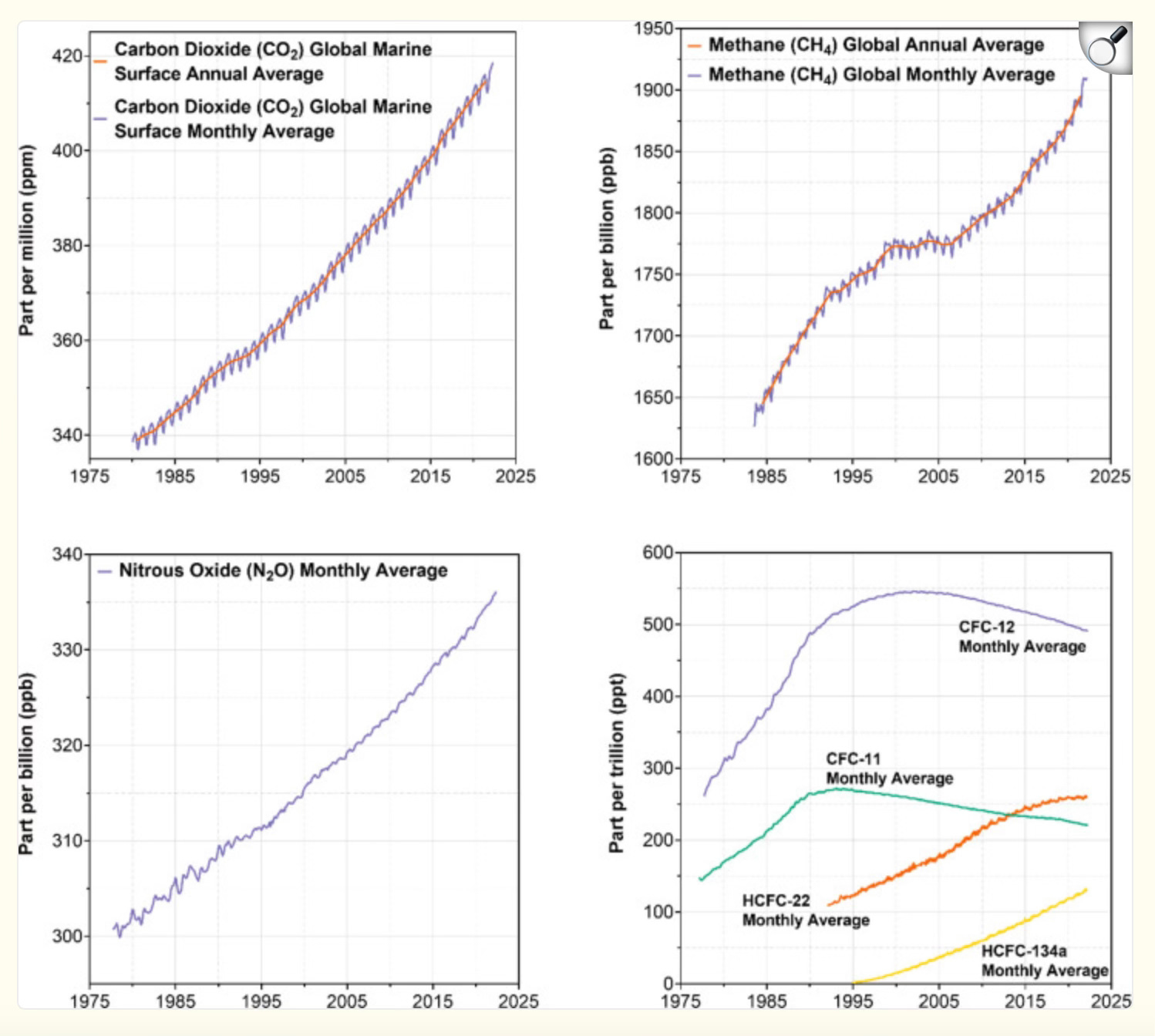
Greenhouse gas pollution from industrialized civilization causing seawater warming, acidification, and reduced oxygen.
Seabed mining for cobalt, nickel, manganese, and other high demand minerals for new energy technologies, electronics, military use, and other applications, causing habitat destruction, sediment plumes, and noise pollution.
Spread of invasive species by oceanic trade and travel tied to shipping, fish farming, the aquarium trade, anthropogenic marine debris, and other factors.
Seawater desalinization with discharge of hypersaline and chemical by-products, and destruction of marine life through intake infrastructure.
Coastal development involving commercial, industrial, and urban expansion, and marine pollution, coastal erosion, habitat loss, and myriad associated consequences.
Off-shore development including oil infrastructure, wind turbines, subsea pipelines, artificial islands, and other structures.
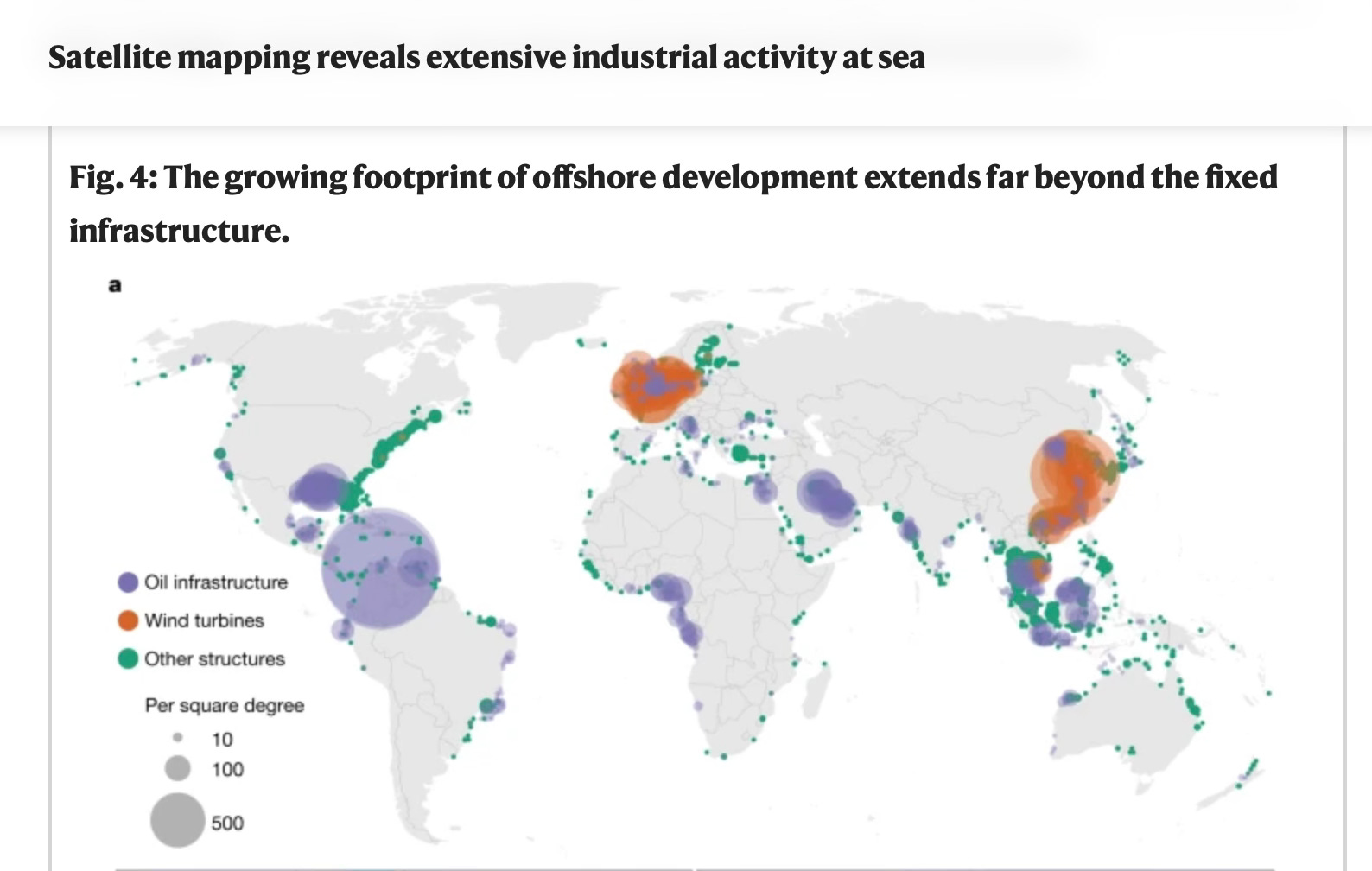
The mind-blowing magnitude of all of the above should sober up even the most optimistic environmentalists.
❖
Comments on Scale Down Ethics and Strategy
The Great Land Heist, Water Thievery Writ Large, and Robbing the Ocean Blind tell a story of incredible pillaging of Earth by an overgrown civilization with no ethical code to safeguard non-human life. This great injustice can be remedied only by reversing the process, by scaling down the human enterprise and by establishing a biocentric society.
Lifestyles and social movements
Reversing overgrowth requires both personal and systemic change. At Scale Down, we urge people (including ourselves) to consume less of just about everything, strive for sufficiency as a way of life, and numerically limit children or stay child-free.
Those of us who have already achieved much of this are understandingly more demanding of others on these matters. The drawback is that we (collectively) have no power other than persuasion. We’ll continue debating whether demanding or urging change results in a better outcome.
In my view, simply insisting that humans stop eating fish or meat, or stop driving cars or flying on planes, or stop reproducing is not going work. We face a mindset problem that’s deeply rooted in today’s global culture. I don’t believe we can change that by decree, even if (a big if) any government or international body were willing to go that route.
Even people with deep ecological and moral concerns about maltreatment of non-human life can face major personal and social hurdles in reducing consumption. They ask themselves challenging questions such as, “What clothes can I do without?” “Can I eliminate seafood, meat, milk, yogurt, soy products, bananas, etc. from my diet?” “How can I travel less and still satisfy my desire to see the world or visit distant family and friends?”
If questions such as these make scale down seem problematic, a better, more satisfying line of self-inquiry might be, “How can I be happier and my life more fulfilling and richer by adopting the Gandhian ethic of living simply so that others may simply live?”
For many, the most promising path to scale down begins with “low-hanging fruit,” that is, limiting or ending consumption of things that are easiest to forego. As sufficiency becomes one’s modus operandi, one fruitfully ascends the scale down tree.
Well then, what about the rest of humanity? If, say 10 percent of people benefit life by quietly scaling down, what happens if overconsumption by the other 90% ensures continued destruction of nature? Obviously, systemic cultural and institutional change is needed.
So, how might that happen? For one thing, it would require a social movement far greater than anything we’ve seen thus far. Harvard’s Erica Chenoweth estimated that, for a successful social campaign, active and sustained participation by 3.5% of a population is needed. That would be a good start. But we’re talking not only about changing governance but about changing a consumptive mindset that’s driven and reinforced by corporations, political leaders, prevailing economists, and even certain religious beliefs.
Nevertheless, the emergence of, let’s say, a major youth movement that rejects consumerism, or media platforms and actors promoting sufficiency lifestyles could grease the wheels for essential political reforms and a wellbeing-focused, post-growth economy.
Interim measures
Some critics of Scale Down suggest that we’ve all but given up on conventional ways of protecting the living world. This is not true. However, we’ve argued that after more than a century of trying, these efforts have not stopped massive destruction of wildlife and natural ecosystems.
We join other conservationists in calling for and creating more protected areas, both terrestrial and marine (currently, only 2.8% of the global ocean is fully or highly protected from fishing, oil and gas extraction, seafloor mining, heavy shipping, and development).
We join other environmentalists in calling for greater regulation of exploitive and polluting industries, for technologies that help diminish energy and resources use, and for informed choices by consumers, such as those described in seafood guides.
We join other social justice advocates in calling for major economic and political reforms, and for an end to crony capitalism.
We join animal advocates in pushing for policies and lifestyle choices that greatly reduce suffering of animals, domestic and wild.
At the same time, we plea with our colleagues to never ignore the problem of scale, knowing that the ecological/moral mega-crisis cannot be resolved solely by work or good intentions to improve human behavior, and certainly not by more “sustainability” hype.
From our perspective, just about any conservation, environmental, or social justice advocacy that leads to a reduction in the size of the human enterprise is a good thing.
As for our beloved Ocean, the suffering we inflict on marine life in no way can be morally justified. This ethical matter is seldom considered when environmentalists focus solely on “sustainable fisheries” as the solution to “overfishing.” Unless one is afflicted with extreme anthropocentrism, there can be no justification for such massive killing of sea creatures nor for disrupting marine communities that have long supported an incredible diversity of life.
Finally, for those who believe that collapse of civilization is imminent, that remain unconvinced that it can shift from deadly exploitation to coexistence with other life, be consoled by this:
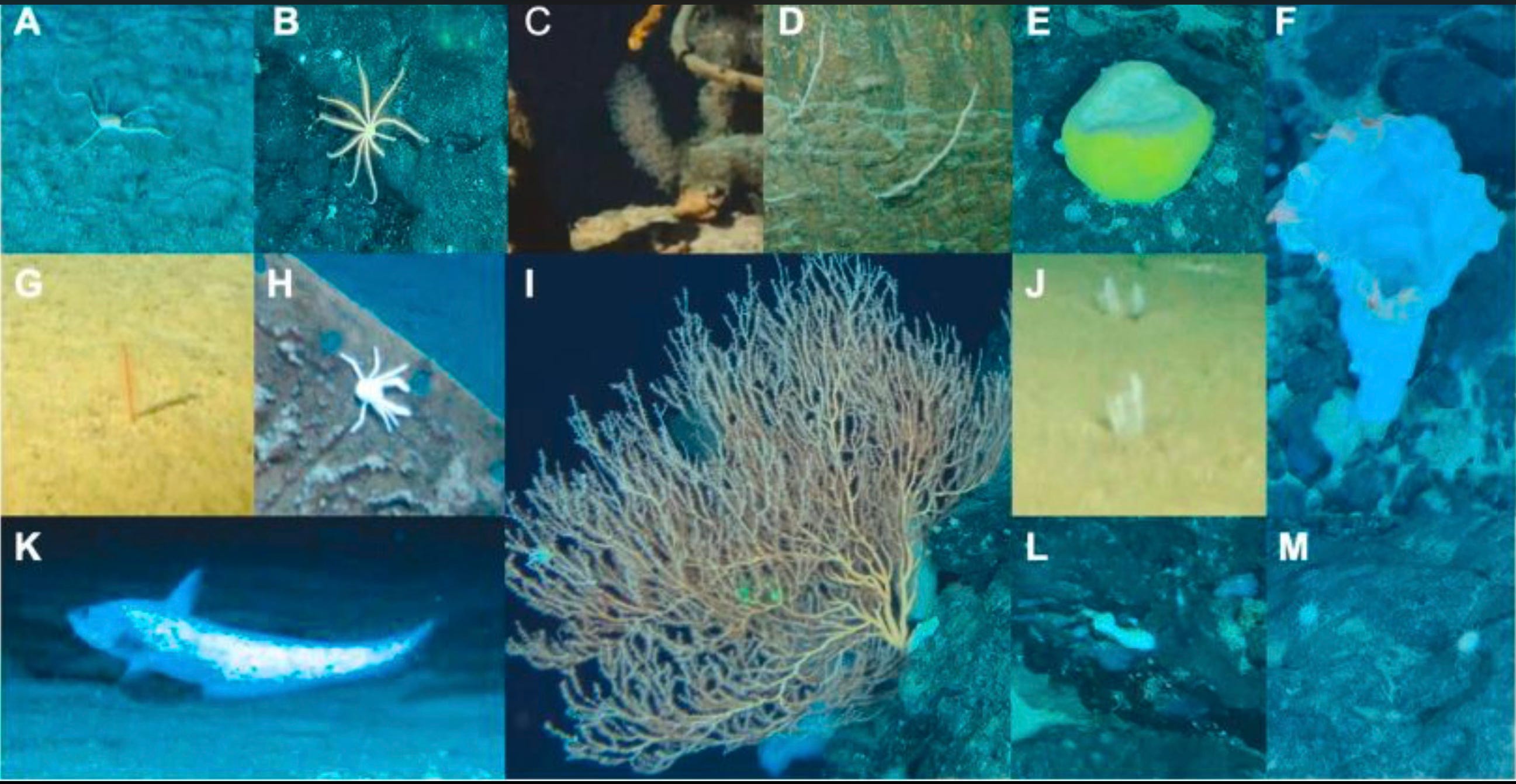
Strange animals have been found 3,800 m deep at the Titanic wreck. Bacteria and a cold-water coral species live on the bow railings, many deep-water creatures are living in and around the ruined ship…including ghost-white squat lobsters, skulking brittle stars, twisted bamboo corals, sea anemones, sea sponges, barnacles, squat lobsters, and the big-eyed rattail fish.
Life thrives among civilization’s wreckage. With time to heal, living communities flourish.
❖
So. Tony, if I understand you correctly, you're saying that too many humans are using/depleting too many natural resources, particular marine animals, and, thus, producing too much pollution, including ocean heating and climate collapse? Jus' sayin'.
There is a Hawai'ian word "Kahu" one of its make meanings is 'Stewardship'
And because we don't recognize a physicality or we don't understand a 'language'. does not make it and less a sentient being... it just reflects our blindness for what we didn't see